Save to Pinterest
 My grandmother kept a cast iron pot on her stove year-round, and this stew was her answer to almost everything—a pot of black-eyed peas and collard greens simmering away while the house filled with the kind of smell that made you forget what day it was. She never measured anything precisely, just moved through the kitchen with the confidence of someone who had made this dish a hundred times before, tasting as she went, adjusting the salt with a knowing nod. Years later, I realized she wasn't just making dinner; she was teaching me that real comfort food comes from understanding your ingredients and trusting your instincts.
I made this for my neighbor after she mentioned missing her mother's cooking, and watching her face when she took that first spoonful—the way her eyes softened—I understood why my grandmother guarded this recipe like a treasure. She didn't ask for the recipe that day, but she came back the next week with cornbread she'd baked, and we ate it together on her porch while the weather turned cooler. That's when I realized this stew does something most food can't; it creates its own kind of belonging.
Ingredients
- Olive oil: Use a good quality oil here because it's one of the first flavors to hit the pan and sets the tone for everything that follows.
- Yellow onion, carrot, celery: This holy trinity is your foundation—they soften into almost nothing, but their sweetness becomes the backbone of the broth.
- Garlic: Never skip the garlic sauté step; that minute of cooking transforms raw bite into something mellow and almost buttery.
- Jalapeño: Keep the seeds in if you want real heat, or remove them entirely if you're cooking for people who prefer gentle warmth.
- Collard greens: Buy them fresh if you can and remove the tough stems yourself—it only takes a minute and makes a real difference in texture.
- Canned diced tomatoes: The acid from the tomatoes brightens everything and keeps the stew from feeling too heavy.
- Black-eyed peas: Canned works perfectly fine, but if you cook dried ones yourself, you'll taste a subtle earthiness that lingers.
- Vegetable broth: Low-sodium is crucial because you're controlling the salt, and cheap broth can overwhelm the delicate flavors of the greens.
- Smoked paprika: This is where the soul comes in—it gives you that smoky depth without needing meat, though you can absolutely add some if that's your preference.
- Dried thyme: Fresh thyme is lovely if you have it, but dried holds up beautifully during the long simmer.
- Cayenne pepper: Keep it optional and add slowly; you can always build heat, but you can't take it back.
- Bay leaves: Remove them before serving—I learned this the hard way by biting into one during dinner at someone's house.
- Apple cider vinegar: This is the secret finisher that makes people ask what you did differently; it brightens everything at the very end.
Tired of Takeout? 🥡
Get 10 meals you can make faster than delivery arrives. Seriously.
One email. No spam. Unsubscribe anytime.
Instructions
- Start with the aromatics:
- Heat your olive oil over medium heat and add the onion, carrots, celery, and jalapeño if you're using it. You're looking for them to soften and turn translucent, which takes about 6 to 8 minutes and fills the kitchen with the smell that says something good is happening.
- Build the flavor base:
- Once those vegetables are soft, add the minced garlic and let it cook for just one minute—this is where you want to watch it carefully so it turns fragrant but not brown. Then stir in your smoked paprika, thyme, cayenne if using it, salt, and black pepper, cooking for another minute to bloom the spices in the hot oil.
- Add the greens:
- Chop your collard greens and add them to the pot, stirring for about 3 to 4 minutes while they begin to wilt and soften. The pot will look impossibly full at first, then suddenly everything settles down.
- Build the stew:
- Pour in your canned tomatoes with all their juices, add your black-eyed peas (drained and rinsed if using canned), pour in the broth and water, and toss in those bay leaves. Give everything a good stir so nothing is sitting on the bottom of the pot.
- Let time do the work:
- Bring the whole thing to a simmer, then lower the heat and cover the pot partially, letting it cook low and gentle for 45 to 50 minutes while you do something else. Stir it occasionally—not because it needs it, but because checking on it is one of the pleasures of making stew.
- Finish with brightness:
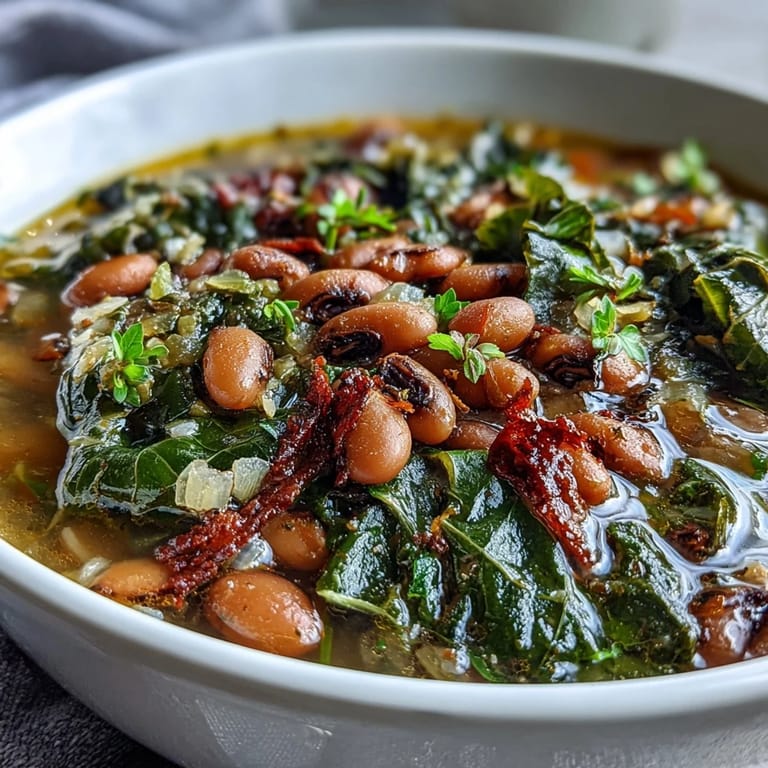
- Remove the bay leaves carefully, then stir in your apple cider vinegar and taste it the way my grandmother taught me, adjusting salt and pepper until it tastes like home. This vinegar at the end is magic; it wakes up every flavor you've been building.
 Save to Pinterest
 There's a moment about halfway through cooking when the whole kitchen smells exactly like comfort, and you know without tasting it that you've made something right. That's the moment I chase every time I make this stew, because it means people are going to feel cared for when they eat it.
The Soul Food Connection
This stew carries real history in every spoonful—black-eyed peas and collard greens are more than just vegetables and legumes together, they're a conversation about resilience and tradition and making something magnificent from humble ingredients. When you make this, you're tapping into generations of cooks who understood that the best food doesn't announce itself with complexity; instead, it whispers that you're safe, you're fed, you belong. My grandmother never called it soul food explicitly, but she lived it every time she cooked.
Variations and Personal Touches
If you want to pull in a meat flavor without actually needing meat, that liquid smoke your grandmother might have on a shelf works wonders—just a teaspoon stirred in with the spices gives you that smokehouse depth. Some cooks add a ham hock or smoked turkey, and if that's your way, sauté it alongside the vegetables and let it flavor the whole pot. For heat, I've had this made with so much jalapeño it was almost aggressive, and I've had it made gentle enough for people who can't eat spicy food, so you really do get to make this your own.
Serving and Storage Wisdom
Serve this hot with cornbread on the side if you can manage it—the bread becomes almost a spoon, and that combination is what people remember. This stew keeps beautifully in the refrigerator for several days and actually freezes well, so don't hesitate to make a double batch and have it ready for mornings when everything feels too complicated.
- A splash of hot sauce or fresh lemon juice on top of each bowl changes everything and lets people customize their own bowl.
- Leftover stew mixed with a bit of cornmeal becomes almost a cornbread topping if you're willing to experiment.
- Make sure your bay leaves are fully removed before serving—count them going in and count them coming out.
 Save to Pinterest
 This stew is the kind of dish that shows people you understand them—not through fancy techniques, but through time and care and the willingness to let flavors build slowly. Make it when someone needs feeding, and make it for yourself on the days when you need to remember that good food and good people are all you really need.
Recipe FAQs
- → Can I make the stew spicier?
Yes, adding more jalapeño or cayenne pepper will increase the heat while maintaining the stew's smoky depth.
- → What is the best way to prepare collard greens for this dish?
Remove stems and chop the leaves finely, then cook them until tender to blend well with the peas and broth.
- → Can smoked meats be added to enhance flavor?
Adding diced smoked turkey or ham during vegetable sautéing adds richness and smoky aroma to the stew.
- → Is this dish suitable for gluten-free diets?
Yes, the stew is naturally gluten-free, but check canned ingredients for any hidden gluten sources.
- → What sides pair well with this stew?
Traditional sides like warm cornbread or a splash of lemon juice complement the hearty flavors excellently.