 Save to Pinterest
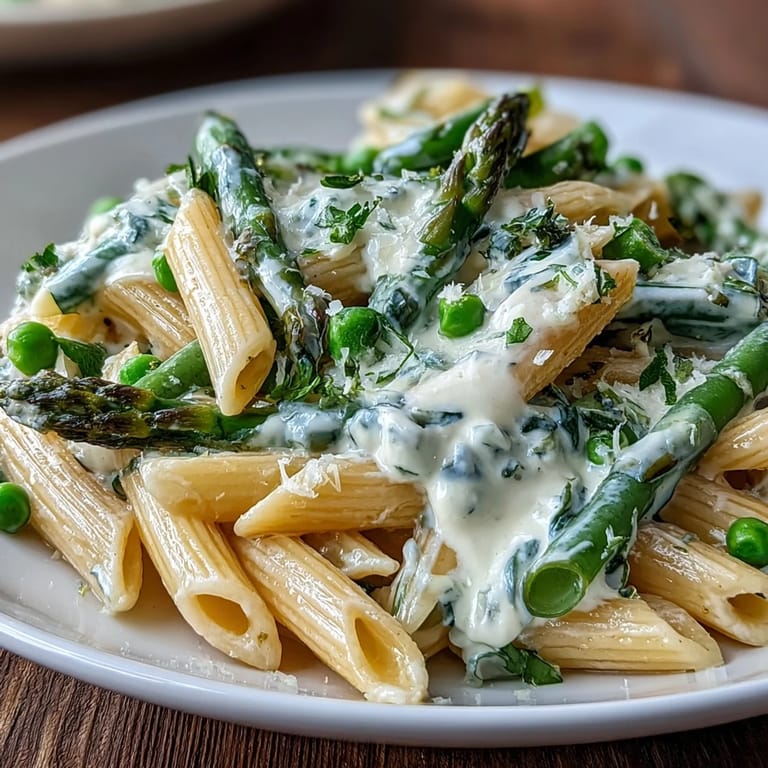
 There's something about spring that makes you want to abandon heavy sauces and embrace vegetables that actually taste like something. Last April, I found myself staring at a farmers market haul of the most vibrant asparagus and snap peas I'd seen in months, and instead of overthinking it, I threw together this pasta in my tiny kitchen while the afternoon light streamed through the window. The garlic hit the hot oil with that perfect sizzle, the vegetables tumbled in bright and crisp, and twenty minutes later I had something that felt like spring in a bowl. It's become my go-to when I want to feel like I've nailed dinner without spending hours at the stove.
I made this for my sister who swears she doesn't like creamy pasta, and watching her go back for seconds while insisting it was "different somehow" might be my proudest kitchen moment. The lemon juice is what does it—it cuts through the cream in the best way, making everything taste fresher than it has any right to be. She's made it three times since then, which tells you everything.
Ingredients
- Penne pasta, 350 g (12 oz): The tube shape traps the creamy sauce perfectly, but any short pasta works if that's what you have on hand.
- Asparagus, 200 g (7 oz): Trim from the woody end by snapping each spear where it naturally breaks—this little trick saves you from chewing on tough bits later.
- Fresh or frozen peas, 150 g (1 cup): Frozen peas are honestly just as good here and require zero prep, so don't feel guilty using them.
- Green beans, 150 g (1 cup): Cut them the same length as the asparagus so everything cooks evenly and looks intentional on the plate.
- Olive oil, 2 tbsp: This is your base, so don't skimp on something you actually like tasting.
- Garlic, 3 cloves: Mince it fine so it melts into the sauce rather than lurking in chunks—you want it to flavor everything, not assault your palate.
- Vegetable broth, 60 ml (1/4 cup): This adds depth without overpowering the vegetables, and it's gentler than water.
- Heavy cream, 120 ml (1/2 cup): The soul of the sauce, though you can use half-and-half if you prefer something lighter.
- Parmesan cheese, 60 g (2/3 cup): Grate it fresh if you have time—the pre-grated stuff works but tastes a bit flat by comparison.
- Black pepper and salt: Taste as you go because Parmesan is salty, and you don't want to overdo it.
- Lemon zest and juice: This is the secret weapon that makes people ask for the recipe.
Tired of Takeout? 🥡
Get 10 meals you can make faster than delivery arrives. Seriously.
One email. No spam. Unsubscribe anytime.
Instructions
- Get your water boiling:
- Fill a large pot with salted water—it should taste like the sea—and let it come to a rolling boil before adding pasta. While you're waiting, prep your vegetables so nothing catches you off guard.
- Cook the pasta to al dente:
- Follow the package timing but pull a piece out a minute early to taste it. You want some bite left in there because it'll finish cooking slightly when you toss it with the hot sauce.
- Wake up the garlic:
- Heat olive oil in a large skillet over medium heat until it shimmers, then add your minced garlic and let it go for about a minute until it's fragrant but not brown. Brown garlic tastes bitter and will ruin the whole thing, so watch it closely.
- Give the vegetables a quick sauté:
- Add the asparagus, green beans, and peas to the skillet and cook for 3-4 minutes, stirring occasionally so everything gets a little color and heat. They should still snap when you bite into one, not be soft.
- Build the sauce foundation:
- Pour in the vegetable broth and let it bubble away for a couple of minutes, which helps the vegetables absorb some of that flavor. Then reduce the heat to low—this is important because high heat will make the cream break and look grainy.
- Make it creamy:
- Add the heavy cream and grated Parmesan, stirring constantly until the cheese melts completely and the sauce becomes smooth and silky. If it looks too thick, you'll thin it in the next step, so don't worry.
- Bring it all together:
- Add the drained pasta to the skillet and toss everything to coat, pouring in some of that reserved pasta water a little at a time until the sauce clings to the noodles without pooling at the bottom. The starch in that pasta water is magic for bringing everything together.
- Finish with brightness:
- Stir in the black pepper, salt, lemon zest, and lemon juice, tasting as you go and adjusting the seasoning. Serve immediately while everything is still hot and the vegetables are at their brightest.
 Save to Pinterest
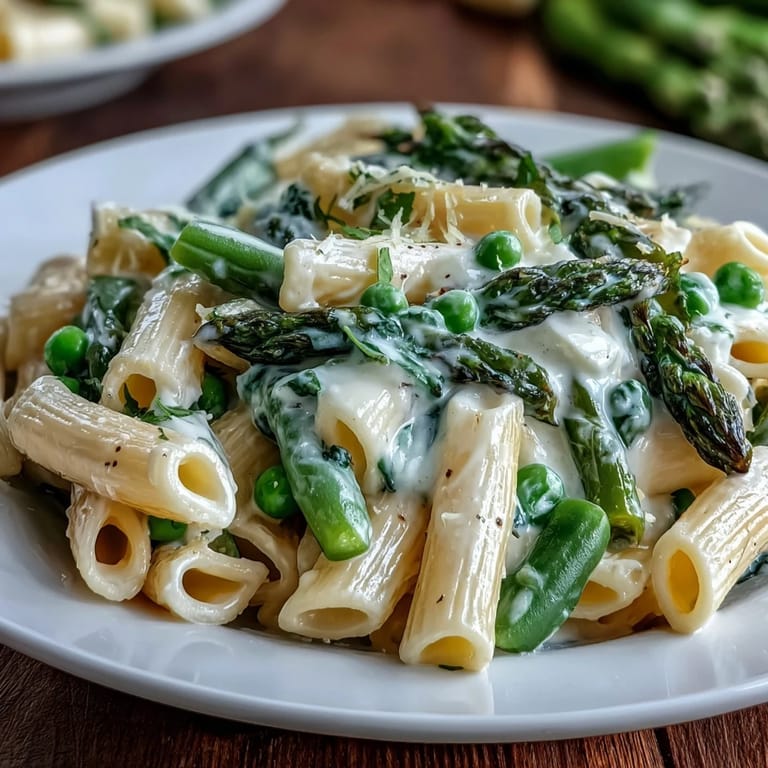
 There was a Tuesday evening when a friend called last minute asking if dinner was happening, and I had exactly these ingredients in my kitchen. Forty minutes later we were sitting on my balcony with full plates and the city sprawling out below us, and she said, "This is restaurant quality." That's when I knew this recipe had graduated from "something I threw together" to "something I actually want to make again and again."
Why Lemon Matters Here
I made this once without the lemon juice because I was lazy, and it tasted flat and one-dimensional—just cream and cheese without any spark. The acid from the lemon wakes everything up, brightening the vegetables and cutting through the richness in a way that makes your palate feel happy instead of heavy. It's a small ingredient that does enormous work.
Adapting This for What You Have
The beauty of this dish is that it's flexible without losing its soul. I've made it with broccoli when asparagus wasn't in season, added sun-dried tomatoes for a different color, and once threw in some fresh spinach at the very end because I had it sitting in my crisper drawer. The core—garlic, cream, Parmesan, lemon—stays the same, but you can swap vegetables without hesitation.
Storage and Reheating
This pasta keeps in the refrigerator for three days, though it's best eaten the day you make it when everything is still fresh and the vegetables haven't gotten soft. If you need to reheat it, add a splash of cream or broth to loosen the sauce, which tends to tighten as it sits, and warm it gently over medium-low heat rather than blasting it in the microwave.
- Don't freeze this—the cream-based sauce gets weird when thawed.
- Add fresh herbs right before serving so they taste bright instead of wilted.
- Make the sauce and cook the vegetables ahead if you want, then just combine them with hot pasta when you're ready to eat.
 Save to Pinterest
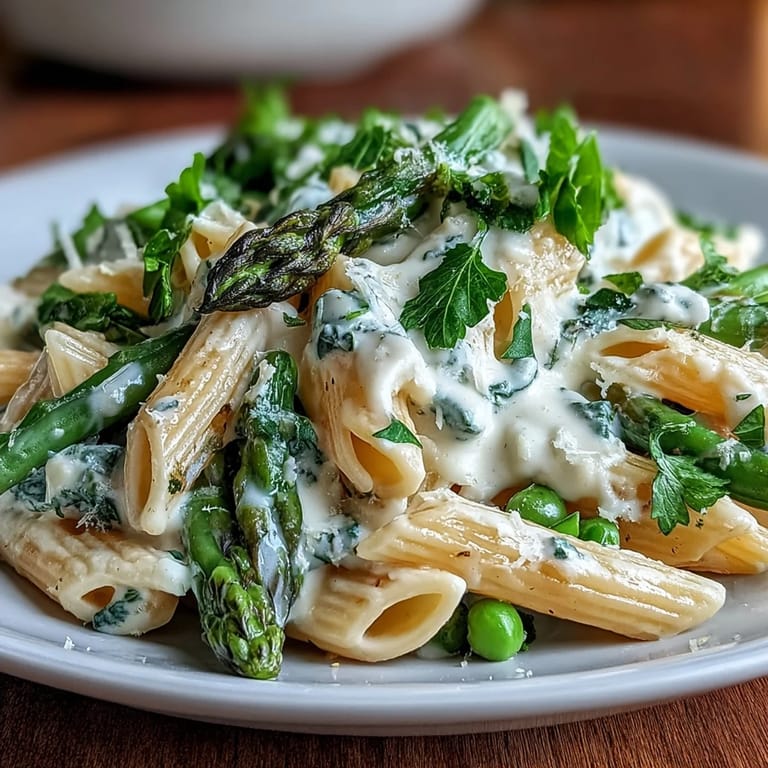
 This pasta is one of those dishes that proves you don't need complicated techniques or obscure ingredients to make something that feels special. It's proof that sometimes the best meals come together when you're not trying too hard.
Recipe FAQs
- → Can I make this pasta ahead of time?
The dish is best enjoyed immediately while the vegetables retain their bright color and crisp-tender texture. However, you can prep components in advance—chop vegetables, grate cheese, and measure ingredients up to a day before. Cook everything just before serving for optimal results.
- → What other vegetables work in this dish?
Spring offers many alternatives: try sugar snap peas, baby spinach, arugula, or diced zucchini. You can also add fresh herbs like tarragon, chives, or dill alongside the basil or parsley garnish for additional flavor complexity.
- → How do I store leftovers?
Store cooled pasta in an airtight container in the refrigerator for up to 3 days. Reheat gently with a splash of cream or broth to restore sauce consistency. The vegetables will soften slightly but the dish remains delicious.
- → Can I use a different pasta shape?
Yes! Farfalle, fusilli, rotini, or rigatoni all work beautifully. Short pasta with ridges or tubes captures the creamy sauce well. If using longer noodles like spaghetti, consider cutting vegetables into smaller pieces for easier eating.
- → How can I add protein to make it more filling?
Stir in shredded rotisserie chicken, sautéed shrimp, or pan-seared chickpeas. Crispy pancetta or prosciutto would complement the Parmesan beautifully. For plant-based protein, white beans or tofu cubes work nicely.
- → Is the lemon necessary?
The lemon zest and juice provide essential brightness that cuts through the rich cream and enhances the fresh vegetables. If needed, substitute with a splash of white wine vinegar or omit entirely, though the final dish will taste slightly heavier.