 Save to Pinterest
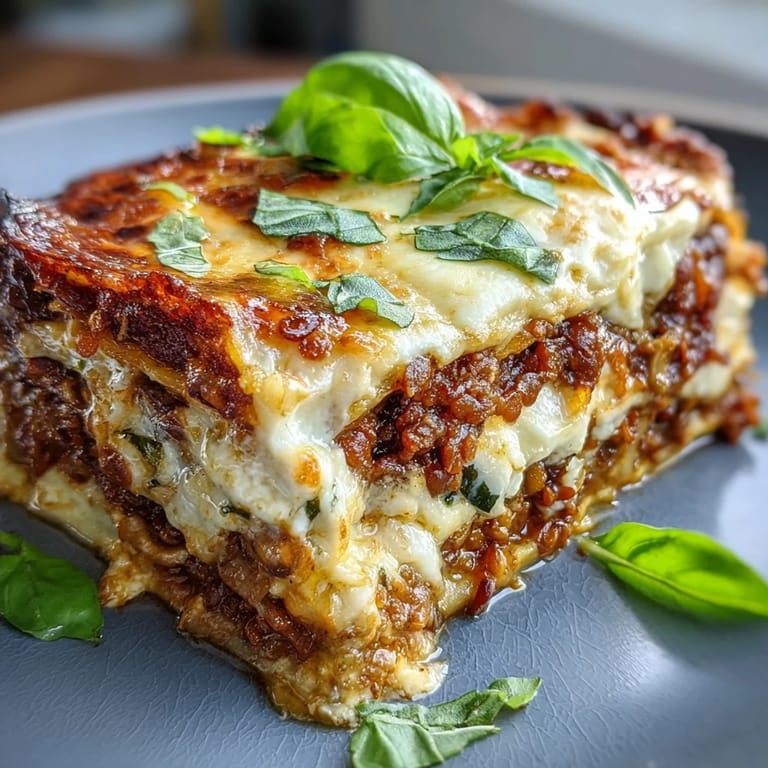
 There's something quietly satisfying about opening your oven door to find a bubbling, golden lasagne that required only one pan and minimal fuss. I discovered this version of lasagne on a rainy Tuesday when I was determined to make something that felt restaurant-worthy without the usual mountain of dishes afterward. The moment the smoked paprika hit the pan, filling my kitchen with that deep, woody aroma, I knew this was the one. What started as an experiment with red lentils as a hearty base became the dish I now make whenever I want to impress people—or simply feed myself something genuinely nourishing without the theatrical cleanup.
I made this for my neighbor last autumn when she'd just moved in, and she sat at my kitchen counter watching the whole process unfold. She kept saying it seemed too simple to be real, but when that first forkful went in—layers still warm, cheese still melting into the sauce—something just clicked. She's now made it four times herself, and she always texts me a photo of it coming out of the oven. That's when I knew this wasn't just a recipe; it was something people genuinely wanted to cook again.
Ingredients
- Olive oil (2 tbsp): Use decent quality here—it's one of the few ingredients that truly shines through, especially when building the aromatic base.
- Onion and garlic (1 large onion, 2 cloves): These are your flavor foundation; don't rush the chopping, as finely cut pieces cook more evenly and release their sweetness better.
- Carrot, red bell pepper, mushrooms, and courgettes (1 carrot, 1 pepper, 250 g mushrooms, 2 courgettes): The vegetables are what make this hearty and satisfying; chop them roughly the same size so they cook at the same pace.
- Smoked paprika (1 tsp): This is the soul of the sauce—don't substitute or skip it, as regular paprika lacks that essential smoky depth that defines this dish.
- Dried oregano and thyme (1 tsp oregano, 1/2 tsp thyme): Dried herbs work beautifully here because they bloom in the simmering sauce; fresh herbs would lose their punch with the longer cooking time.
- Chili flakes (1/2 tsp, optional): A tiny whisper of heat that rounds out the flavors beautifully; I always include it, but leave it out if you're cooking for people who prefer milder food.
- Tomato paste and canned tomatoes (1 tbsp paste, 400 g canned): The paste concentrates flavor in a way fresh tomatoes can't manage in such a short cooking time.
- Soy sauce (1 tbsp): A secret ingredient that adds umami depth without anyone realizing what it is; it transforms the sauce from good to genuinely memorable.
- Red lentils (125 g, rinsed): These cook quickly and become almost creamy, creating a texture that mimics ground meat beautifully while staying completely plant-based.
- Vegetable stock (500 ml): Use something flavorful you'd actually drink; bland stock makes bland sauce.
- Unsalted butter and plain flour (40 g each): The classic béchamel base; room-temperature butter whisks in more smoothly than cold butter straight from the fridge.
- Whole milk (600 ml): Cold milk whisked slowly into the flour mixture prevents lumps from forming and creates that silky, coating sauce.
- Ground nutmeg (1/4 tsp): A pinch transforms béchamel from ordinary to elegant; it's a tiny detail that people taste without knowing what it is.
- Mature cheddar or hard vegetarian cheese (60 g grated): The aged cheese adds sharpness that balances the creamy sauce; mild cheese gets lost here.
- No-boil lasagne sheets (9–12 sheets): These save time and genuinely work as long as your sauce is wet enough to soften them during baking.
- Mozzarella or vegetarian cheese topping (50 g grated): Choose something that browns nicely; some mozzarella substitutes don't have the same appeal.
- Fresh basil (optional): A handful scattered on top right before serving brings brightness that cuts through the richness.
Tired of Takeout? 🥡
Get 10 meals you can make faster than delivery arrives. Seriously.
One email. No spam. Unsubscribe anytime.
Instructions
- Heat the oven and start building your base:
- Preheat to 200°C (180°C fan) and warm your olive oil in that large ovenproof pan over medium heat. Add your finely chopped onion and minced garlic, letting them soften and turn golden for about 2 minutes—you'll know it's right when the kitchen smells like a proper cooking moment.
- Add the vegetables and let them soften:
- Tip in your diced carrot, red pepper, mushrooms, and courgettes, stirring occasionally for 5–6 minutes until everything has released its moisture and started to color slightly. The mushrooms will shrink down and darken, which is exactly what you want.
- Build the spice layer:
- Stir in your smoked paprika, oregano, thyme, and chili flakes, cooking for just 1 minute so the spices bloom in the hot oil and become aromatic. This is the moment the sauce gets its signature character.
- Combine everything and let it simmer:
- Add your tomato paste, canned tomatoes, soy sauce, rinsed lentils, and vegetable stock, then bring the whole thing to a gentle simmer. Cover loosely and let it bubble away for 15–20 minutes, stirring occasionally, until the lentils have completely broken down into a creamy texture and the sauce has thickened enough that it coats the back of a spoon.
- Make your béchamel while the sauce cooks:
- In a separate medium saucepan, melt your butter over medium heat, then whisk in the flour to create a smooth paste, cooking for about 1 minute. Gradually whisk in your cold milk, working slowly to avoid lumps, then keep stirring until the sauce thickens to a coating consistency, about 5 minutes.
- Season and finish the béchamel:
- Remove from heat and stir in the nutmeg, grated cheddar, and a gentle pinch of salt and white pepper. Taste it—it should be rich, creamy, and just slightly sharp from the cheese.
- Remove half the bolognese and begin layering:
- Carefully transfer half of the cooked vegetable sauce to a bowl and set aside. Spread one-third of your béchamel directly over the remaining sauce in the pan, then break lasagne sheets to fit and layer them on top, pressing gently so they nestle into the sauce.
- Add the middle layers:
- Spread your reserved bolognese over the pasta sheets, pour another third of béchamel over that, and add another layer of broken lasagne sheets, pressing gently once more.
- Top and prepare for baking:
- Finish with the remaining bolognese, top with your final lasagne sheets, and pour the last of the béchamel over everything. Sprinkle your grated mozzarella evenly across the top, then cover loosely with foil.
- Bake covered and then uncovered:
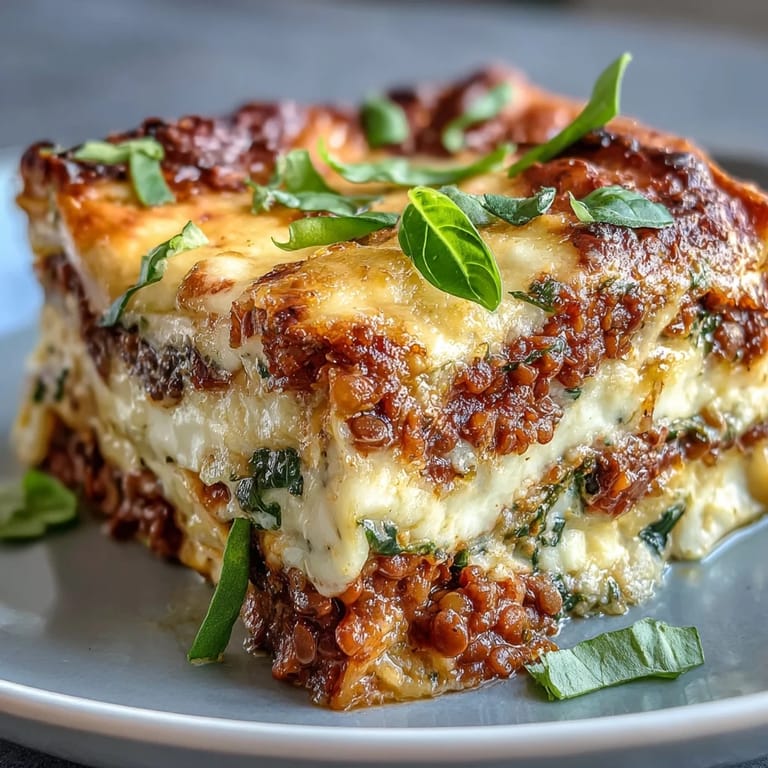
- Bake for 25 minutes under foil so the pasta has time to soften in the steam, then remove the foil and bake for another 10–15 minutes until the top is golden brown and the edges are bubbling visibly. The mozzarella should be melted and just starting to brown.
- Rest before serving:
- Let the lasagne stand for 10 minutes so the layers set and won't slide around on your plate. Scatter with fresh basil if you have it, and serve straight from the pan.
 Save to Pinterest
 What struck me most was when my partner took seconds without asking and said it tasted like something we'd pay for at a proper restaurant. That's the moment I realized this recipe does what the best food does—it blurs the line between weeknight easy and genuinely impressive, making you feel capable in the kitchen without requiring hours of work.
The Smoky Paprika Effect
The first time I made this, I almost skipped the smoked paprika, thinking it wouldn't matter much since there are so many other flavors going on. But my partner walked into the kitchen just as I'd stirred it in and immediately said the smell had changed—that it smelled like something intentional and special. That taught me that some ingredients work quietly in the background but create the entire mood of a dish. It's the difference between a good lasagne and one that makes people sit up and take notice.
One Pan, Genuine Ease
The whole point of using one ovenproof pan is that you're not bouncing between multiple pots and pans at the end of a long day. Building the bolognese right in the serving vessel means fewer transfers, fewer chances to spill, and honestly, it means you're more likely to actually make this on a Tuesday instead of saving it for a special occasion. That shift toward genuinely practical cooking is worth more than any fancy technique.
Variations and Adjustments
This recipe bends beautifully to what you have on hand—I've made it with spinach instead of courgettes, extra mushrooms when bell peppers weren't in the market, and once with a splash of red wine added to the sauce for deeper complexity. The foundation is solid enough that small swaps don't derail the whole thing. The beauty of so many vegetables is that you can read the recipe as a starting point rather than a strict instruction.
- Make it vegan: Swap butter for olive oil or vegan butter, use unsweetened plant-based milk, and finish with cashew cream or nutritional yeast for that savory depth.
- Add extra depth: A splash of red wine added with the tomatoes transforms the sauce into something richer and more complex without requiring different ingredients.
- Serve thoughtfully: A crisp green salad alongside cuts through the richness, or warm garlic bread for soaking up every last bit of sauce.
 Save to Pinterest
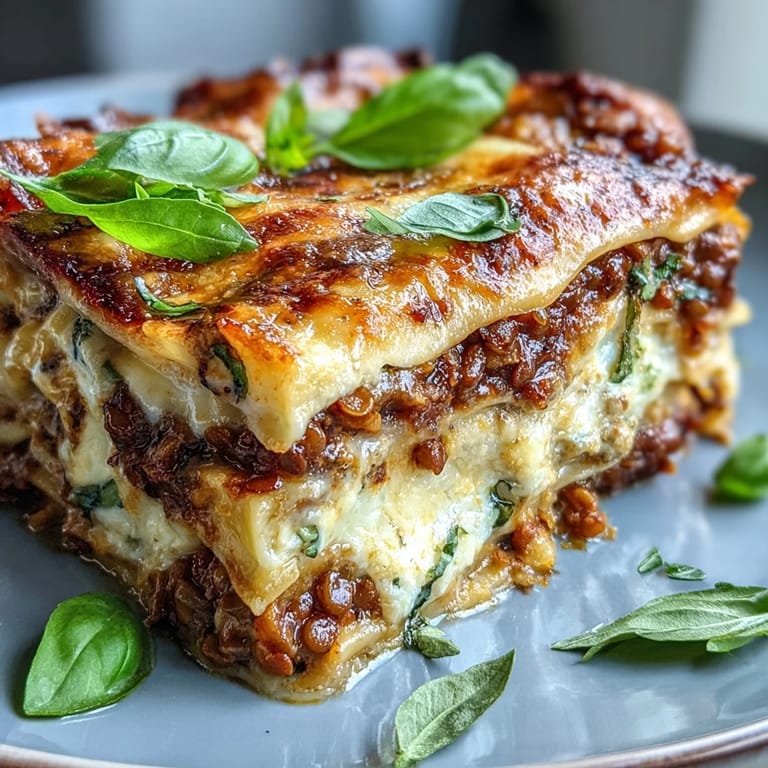
 This lasagne has become my answer to so many moments—when someone asks for a recipe that actually works, when I need comfort food that feels intentional, when I want to cook something that makes my kitchen smell like a real home. Make it once and you'll understand why.
Recipe FAQs
- → Can I make this dish gluten-free?
Yes, simply use gluten-free lasagne sheets and replace the plain flour with a gluten-free alternative like cornflour or rice flour for the béchamel. Tamari makes a great soy-free substitute for soy sauce.
- → How should I store leftovers?
Allow the lasagne to cool completely, then refrigerate in an airtight container for up to 3 days. Individual portions reheat beautifully in the microwave, or cover with foil and warm in a 180°C oven for 15-20 minutes.
- → Can I freeze this lasagne?
Absolutely. Assemble the complete lasagne, wrap tightly in foil plus cling film, and freeze for up to 3 months. Thaw overnight in the refrigerator before baking as instructed, adding an extra 10-15 minutes if still frozen in the centre.
- → What can I substitute for red lentils?
Green or brown lentils work well though may take slightly longer to cook. For a protein-rich alternative, try chopped walnuts or a meat substitute. Adjust liquid accordingly as different ingredients absorb moisture differently.
- → Do I need to cook the lasagne sheets first?
No, using no-boil (oven-ready) lasagne sheets means they cook perfectly in the sauce during baking. If you only have traditional sheets, par-boil them for 3-4 minutes until pliable before layering.
- → Can I prepare this ahead of time?
Yes, assemble the complete lasagne up to 24 hours in advance, cover tightly, and refrigerate until ready to bake. Add 5-10 minutes to the baking time if baking straight from the refrigerator.