 Save to Pinterest
 My neighbor knocked on the door one April morning with a bundle of violets from her garden, asking if I could make something special for her daughter's birthday tea. I'd never attempted a floral cake before, but something about those purple petals made me want to try. That afternoon, as I mixed the vanilla batter and zested lemons until my fingertips smelled like summer, I realized I was making something that felt like spring itself—delicate, bright, and unapologetically celebratory. The cake came together more smoothly than expected, and when that first drip of white chocolate ran down the side, I knew this recipe would become a keeper.
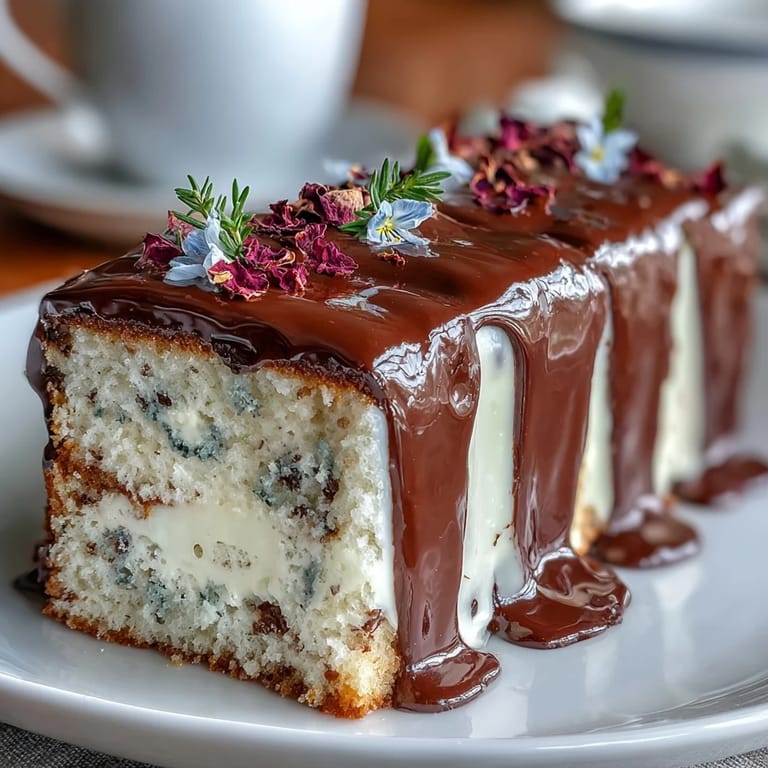
I'll never forget the moment my friend's daughter saw that cake sitting on the linen tablecloth, sunlight catching the white chocolate drips and making the candied violets glow. She went completely quiet, which for a ten-year-old is practically a miracle. Her mother squeezed my hand and whispered that it was the most beautiful thing she'd ever baked for anyone, and honestly, watching people eat something you made with that much joy erases every moment of doubt that creeps in while you're working.
Ingredients
- All-purpose flour: Two and a half cups creates structure without heaviness; sift it once more if you suspect clumps, because a dense cake ruins the whole vibe.
- Baking powder: Two and a half teaspoons keeps the cake light and tender; don't skip or cut back thinking it won't matter.
- Unsalted butter: Two cups total (one for sponge, one for frosting) should be soft enough that your finger leaves a slight indent; cold butter will fight you during mixing.
- Granulated sugar: One and three-quarter cups in the sponge; creaming it with butter for three to four minutes isn't optional if you want that fluffy crumb.
- Large eggs: Four eggs at room temperature mix in smoothly; cold eggs cause the batter to seize and look curdled.
- Vanilla extract: One tablespoon of pure vanilla makes the sponge taste homemade rather than boxed.
- Whole milk: One cup at room temperature helps the batter come together without breaking.
- Powdered sugar: Four cups sifted for the frosting ensures no lumps hide in your beautiful pale yellow icing.
- Fresh lemon juice: Two tablespoons delivers real citrus punch; bottled juice tastes medicinal by comparison.
- Lemon zest: Two teaspoons adds brightness and tiny flecks of color that hint at what's coming flavor-wise.
- White chocolate chips: One cup chopped fine; quality matters here since you're tasting it pure.
- Heavy cream: One-third cup heated gently creates a glossy ganache that drips without pooling.
- Edible flowers: Violets, pansies, and rose petals must be pesticide-free; buy from specialty food shops or grow your own.
Tired of Takeout? 🥡
Get 10 meals you can make faster than delivery arrives. Seriously.
One email. No spam. Unsubscribe anytime.
Instructions
- Set up your oven and pans:
- Preheat to 350°F while you grease three eight-inch round pans and line the bottoms with parchment paper; this prevents sticking and lets you turn the cakes out cleanly. Taking two minutes now saves frustration later.
- Make the dry mix:
- Whisk flour, baking powder, and salt together in a medium bowl; this distributes the leavening evenly so your cake rises uniformly. Set it aside and resist the urge to over-whisk.
- Cream butter and sugar:
- In a large bowl, beat softened butter and granulated sugar for three to four minutes until the mixture looks pale and fluffy like frosting itself. This step incorporates tiny air pockets that make the cake tender.
- Add eggs one at a time:
- Drop in each egg separately and beat well after each addition; rushing this part causes the batter to look broken or grainy. Let each egg fully disappear before adding the next.
- Incorporate vanilla:
- Mix in vanilla extract and let it blend for a few seconds until the aroma hits you—that's when you know it's distributed.
- Alternate flour and milk:
- Add flour mixture, then milk, then flour again, starting and ending with flour and mixing just until combined. Over-mixing at this stage toughens the crumb, so stop as soon as streaks disappear.
- Divide and bake:
- Pour batter evenly among the three pans using a scale if you want perfect layers, or divide by eye and accept slight variations. Bake twenty-five to thirty minutes until a toothpick comes out clean or with a few moist crumbs.
- Cool the cakes:
- Let them sit in the pans for ten minutes so they firm up, then turn out onto wire racks to cool completely. Frosting a warm cake causes the frosting to melt, so patience is essential.
- Make the lemon frosting:
- Beat softened butter until creamy, then gradually add sifted powdered sugar while mixing to avoid lumps. Stir in lemon juice, zest, and milk until the frosting reaches a spreadable consistency.
- Stack and frost:
- Level the cake layers with a serrated knife if the tops domed slightly, then place the first layer on a serving plate and spread a thick frosting layer on top. Repeat with the remaining layers and smooth the frosting over the top and sides for a polished look.
- Prepare the white chocolate drip:
- Heat heavy cream until tiny bubbles form around the edges, then pour it over chopped white chocolate in a heatproof bowl and let sit undisturbed for two minutes. Stir gently until completely smooth and silky; if you want pastel tints, add a tiny amount of gel food coloring and whisk in.
- Cool the ganache:
- Let the white chocolate ganache sit for a few minutes until it thickens to a pourable consistency but still flows. If it sets too firm, you can gently reheat it, but watch carefully so it doesn't seize.
- Add the dramatic drip:
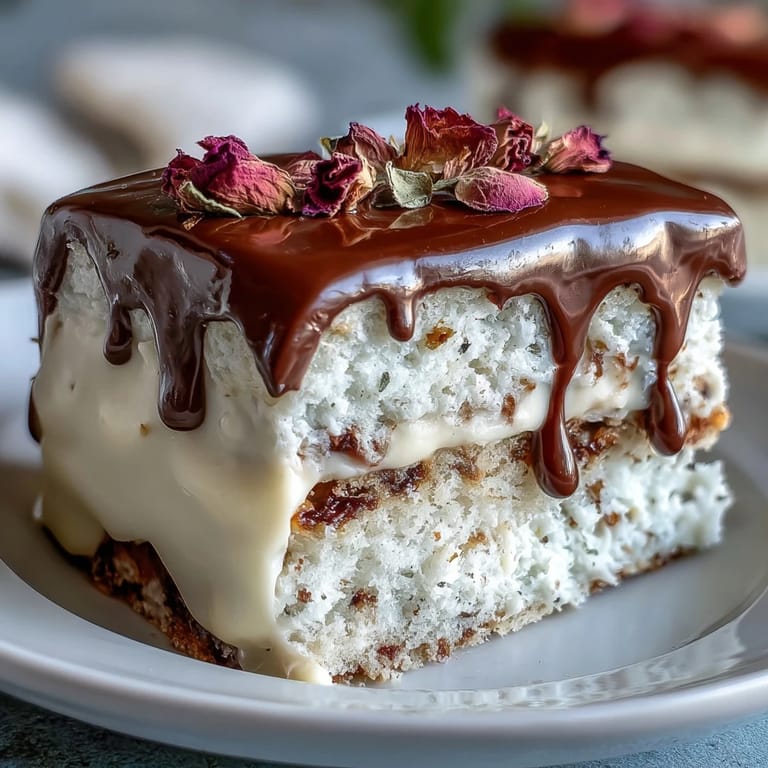
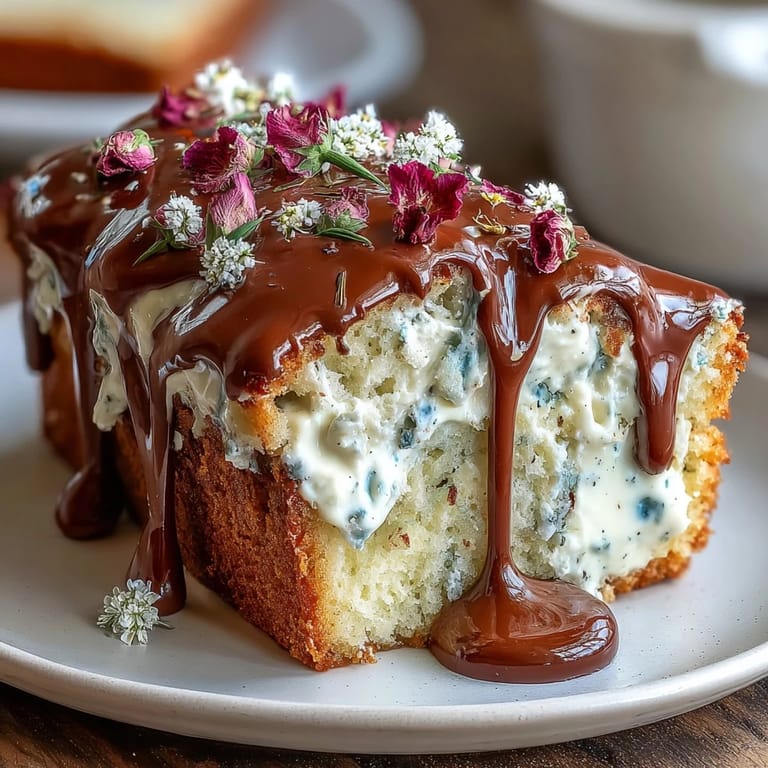
- Using a spoon or squeeze bottle, gently pour white chocolate around the top edge of the cake and let gravity do the work as it drips down the sides. Spread any remaining ganache across the top with a spatula, creating an ombré effect.
- Crown with flowers:
- Arrange edible flowers on top of the cake just before serving, nestling them into the ganache or clustering them in the center. Add extra lemon zest or sprinkles if the mood strikes.
 Save to Pinterest
 That tea party turned into an annual tradition, and every spring I find myself in the kitchen mixing this batter again, waiting for my neighbor to drop off whatever flowers bloomed that week. The cake has become less about impressing people and more about honoring a moment when someone's kindness sparked something creative in me.
Why This Cake Feels Like Spring
There's something about the combination of bright lemon and delicate edible flowers that makes winter feel truly over. The soft vanilla sponge provides a neutral backdrop so the other flavors can shine, while the white chocolate drip adds elegance without stealing the show. Every element exists in balance, which is maybe why this cake works for both everyday celebrations and fancy occasions.
The Secret to Perfect Layers
Dividing the batter equally among three pans is the difference between a cake that looks professional and one that looks homemade in a sad way. If you don't have a kitchen scale, use your eye and adjust slightly if you notice one pan is significantly fuller. Baking at the correct temperature and checking at twenty-five minutes prevents the exterior from browning before the interior sets, which is when you get that uneven crumb.
Serving and Storing This Beauty
The cake tastes best at room temperature when the vanilla sponge is tender and the lemon frosting has softened slightly. Store it in the refrigerator covered loosely for up to three days, bringing it out thirty minutes before serving so the frosting isn't stiff. The edible flowers will soften over time, so add them as close to serving as possible.
- Pair slices with sparkling wine, champagne, or a delicate Earl Grey tea for an afternoon that feels intentional.
- If you're making this for a crowd, you can assemble the cake the day before and decorate it the morning of your event.
- Leftover white chocolate ganache can be refrigerated and reheated gently if you want to drizzle more the next day.
 Save to Pinterest
 This cake proves that beautiful doesn't have to mean complicated, and that the simplest flavors handled with care become something memorable. Bake this when someone's worth celebrating or when you want to remind yourself that spring is real.
Recipe FAQs
- → How do I ensure the vanilla sponge stays moist?
Use room temperature eggs and butter, and avoid overmixing once flour is added to keep the sponge tender and moist.
- → What is the best way to achieve a smooth lemon frosting?
Beat the butter until creamy, gradually add powdered sugar, then mix in fresh lemon juice, zest, and milk until the frosting is smooth and spreadable.
- → How can I make the white chocolate drip perfect?
Warm the cream just until simmering, pour over white chocolate, let sit briefly, then stir until smooth; cool slightly before dripping.
- → Which edible flowers work best for decoration?
Choose pesticide-free edible flowers like violets, pansies, and rose petals to ensure safety and enhance the visual appeal.
- → Can this layered cake be stored safely after preparation?
Store in the refrigerator for up to 3 days, and bring to room temperature before serving for optimal flavor and texture.
- → Is there a gluten-free alternative for the sponge?
You can substitute a 1:1 gluten-free flour blend to make the sponge suitable for gluten sensitivities.