 Save to Pinterest
 There's something about the smell of cumin hitting hot oil that instantly transports me to a bustling morning kitchen, even if it's just me and a skillet. The first time I made shakshuka, I was actually trying to use up vegetables before they went soft, and somehow ended up creating one of those dishes that feels both simple and deeply satisfying. Now whenever I need breakfast to feel like more than breakfast, or dinner to feel like celebration, I find myself reaching for this bowl.
I made this for a friend who'd just moved to the neighborhood, and the way she tore into the pita, chasing every last bit of sauce, made me realize how food bridges the awkward silences. She came back the next week asking if I could teach her, and now it's become our standing Thursday morning thing—less about the recipe, more about having something warm to share while we catch up on the week.
Ingredients
- Onion: The foundation here—when you cook it low and slow for those first few minutes, it softens into sweet, almost caramel-like layers that hold the whole sauce together.
- Red and yellow bell peppers: Together they bring a gentle sweetness and slight earthiness that balances the spice, plus they stay tender without turning to mush.
- Garlic: Always mince it fresh; jarred never quite captures that sharp, living bite you want when you bloom it in oil with the spices.
- Olive oil: Use something you'd actually drink—not the premium stuff, but a good everyday oil that doesn't taste like it's trying too hard.
- Ground cumin and paprika: These two are the backbone; they warm the sauce and whisper of Mediterranean kitchens without shouting.
- Crushed tomatoes: A 28-ounce can is your best friend here—canned tomatoes are more reliable than fresh ones that disappoint.
- Eggs: The larger the better, and make sure they're at least a few days old so the whites set properly around the yolks.
- Fresh cilantro or parsley: Scatter this on at the very end so it stays bright and alive, not cooked into submission.
- Pita bread: Warm it just before serving so it's still slightly pillowy—cold pita is a missed opportunity.
Tired of Takeout? 🥡
Get 10 meals you can make faster than delivery arrives. Seriously.
One email. No spam. Unsubscribe anytime.
Instructions
- Build your aromatic base:
- Heat olive oil in a large skillet over medium heat, then add your chopped onion. Let it sit quietly for about 3 minutes, stirring occasionally—you're not rushing this part, you're letting the natural sweetness start to emerge.
- Layer in the peppers:
- Add your diced bell peppers and jalapeño if you're using it, cooking for 5 minutes until everything softens and begins to caramelize slightly at the edges. You'll know it's ready when the kitchen smells warm and slightly sweet.
- Bloom the spices:
- Stir in minced garlic along with cumin, paprika, coriander, and cayenne pepper. Cook for about 1 minute—this is when the whole mixture comes alive with fragrance and deepens in color. Don't walk away; keep stirring so nothing catches on the bottom.
- Simmer the sauce:
- Pour in your crushed tomatoes and add a teaspoon of sugar, then season with salt and black pepper. Let this bubble gently for 10 to 12 minutes, stirring every so often, until the sauce thickens and the bright red darkens into something more complex and rich.
- Add greens if you're using them:
- Stir in your spinach now and let it wilt into the sauce in just a couple of minutes—it'll practically disappear but add a subtle earthiness.
- Create your egg nests:
- Using the back of a spoon, make 4 to 6 small wells in the sauce, spacing them so they won't crowd each other. Crack an egg into each well, keeping the yolk intact if you can—don't worry if you can't, it still tastes wonderful.
- Finish with gentle heat:
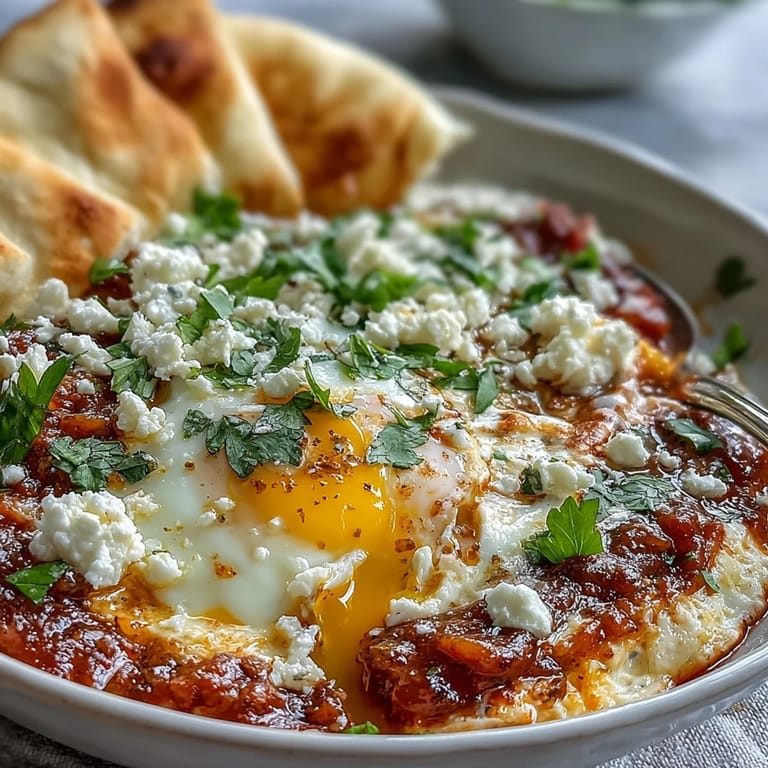
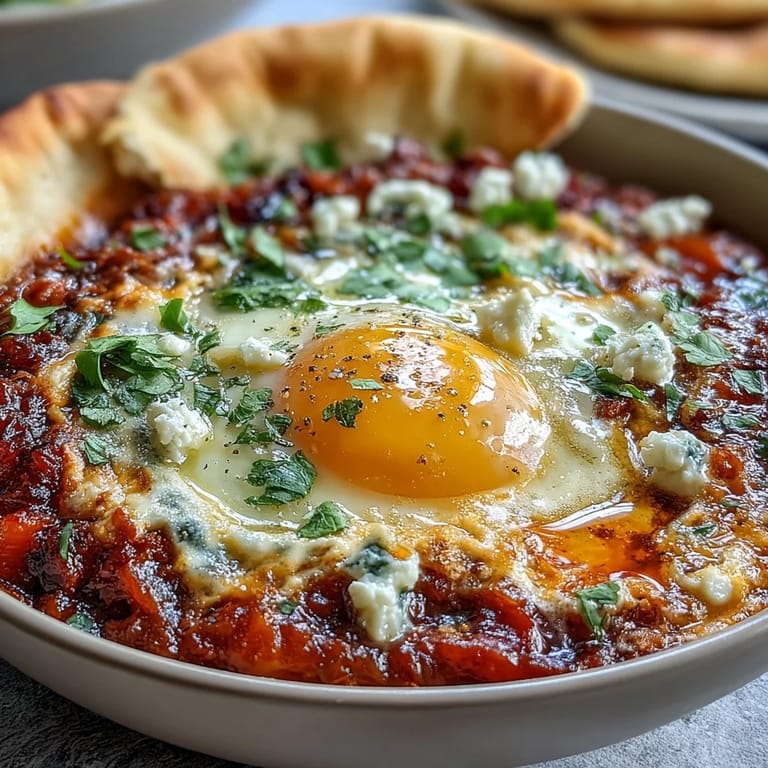
- Cover the skillet and reduce heat to medium-low, cooking for 6 to 8 minutes until the egg whites are completely set but those yolks are still wobbly when you gently shake the pan. The residual heat continues cooking everything, so pull it off just before it looks fully done.
- Garnish and serve:
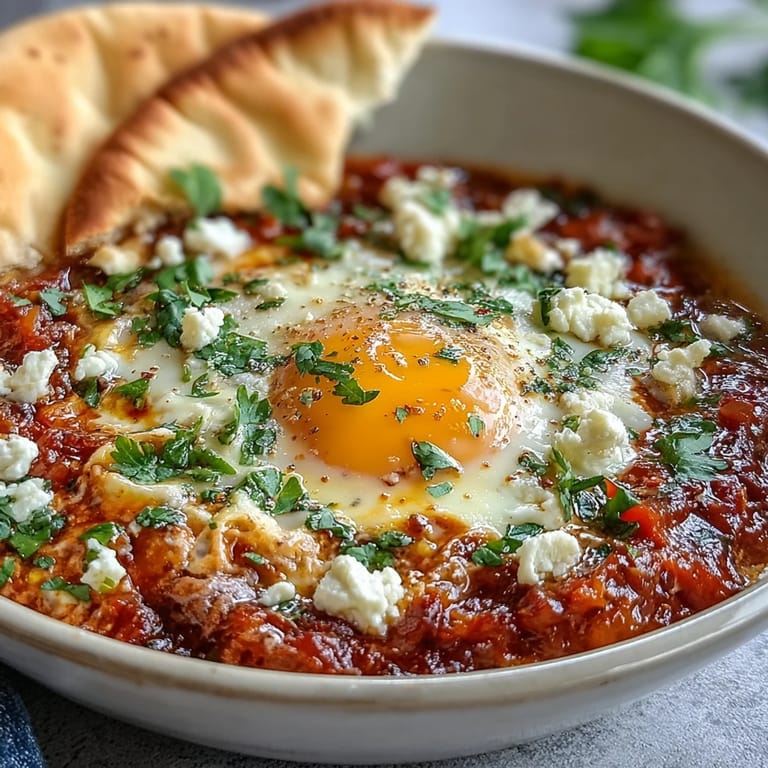
- Remove from heat, scatter fresh cilantro or parsley on top, crumble feta cheese if you'd like that tangy note, and serve immediately with warm pita bread for dipping.
 Save to Pinterest
 There was a morning when my partner and I were both frustrated about something entirely unrelated, barely speaking, and we made this together in silence. By the time we sat down with our bowls, something about the ritual of tearing bread and chasing runny yolks had softened the edges of whatever we'd been upset about, and we ended up laughing.
Variations That Actually Work
This dish loves flexibility more than most recipes do, which is part of why it's become my go-to for feeding unpredictable appetites. I've made it with chorizo scattered through the sauce, added chickpeas for extra protein, thrown in wilted kale instead of spinach, and even swapped the tomatoes for a roasted red pepper sauce when I was feeling experimental. The core—that spiced, simmered base cradling runny eggs—stays sturdy through almost any substitution you want to make.
Making It Vegan or Dairy-Free
If you're skipping eggs, chickpeas or crumbled firm tofu become your anchor in the sauce, adding substance and protein without trying to replicate what they're replacing. The feta cheese adds a salty tang that's lovely but entirely optional—labneh or Greek yogurt on the side works beautifully if you're using dairy, or you can skip it entirely and let the herbs and spices shine.
Playing With Heat and Flavor
The spice level here is gentle by design, which means you can absolutely dial it up or down based on who's eating and what mood you're in. One jalapeño gives a whisper of heat, two gives a definite presence, and if you leave it out entirely, you get something warm and comforting instead of challenging. The cayenne pepper is your secret weapon for depth—even a quarter teaspoon adds complexity without making your guests reach for water.
- Leave the jalapeño seeds in if you want genuine heat, remove them for suggestion.
- Add cayenne in small increments and taste as you go; you can always add more but you can't take it back.
- A squeeze of fresh lemon juice at the very end brightens everything without changing the fundamental character of the dish.
 Save to Pinterest
 This bowl has become my answer to so many different occasions—lazy weekend breakfast, impressing someone new in the kitchen, feeding myself on nights when I need comfort but not drama. There's something deeply satisfying about watching those eggs slowly set in their spiced tomato cradle.
Recipe FAQs
- → What makes shakshuka traditional?
Traditional shakshuka features eggs poached directly in a simmering tomato sauce seasoned with Middle Eastern spices like cumin, paprika, and coriander. The sauce typically includes bell peppers and onions, creating a rich base for the eggs to cook.
- → How do I know when the eggs are done?
Cook covered for 6-8 minutes. The whites should be fully set and opaque, while yolks remain slightly runny when gently jiggled. For firmer yolks, continue cooking 1-2 additional minutes.
- → Can I make this ahead of time?
The tomato sauce base can be prepared 1-2 days in advance and refrigerated. When ready to serve, reheat the sauce until simmering, then crack in fresh eggs and finish cooking.
- → What can I serve with shakshuka?
Warm pita bread is classic for dipping. Other options include crusty bread, couscous, or rice. A side of Greek yogurt or labneh adds creaminess to balance the spiced sauce.
- → How can I adjust the spice level?
Control heat by adjusting the jalapeño and cayenne pepper quantities. Omit both for a mild version, or increase cayenne to ½ teaspoon and include the jalapeño seeds for extra warmth.
- → Is this suitable for meal prep?
The sauce reheats beautifully, though eggs are best cooked fresh. Store sauce separately and poach eggs when ready to eat for optimal texture and runny yolks.